Physician overview of NAD+: how it works in cellular energy, the difference between injectable and oral, what the evidence shows, and honest monitoring guidance.
Physician overview of NAD+: how it works in cellular energy, the difference between injectable and oral, what the evidence shows, and honest monitoring guidance.
Physician overview of NAD+: how it works in cellular energy, the difference between injectable and oral, what the evidence shows, and honest monitoring guidance.
Injectable L-Glutathione: The Antioxidant That Doesn't Survive the Stomach — and Why Delivery Method Matters
Injectable L-Glutathione: The Antioxidant That Doesn't Survive the Stomach — and Why Delivery Method Matters


Stephen Ratcliff, MD
Chief Medical Officer
NAD+
Image is AI-generated and does not represent actual results.
Stephen Ratcliff, MD
Chief Medical Officer
NAD+
Image is AI-generated and does not represent actual results.
Stephen Ratcliff, MD
Chief Medical Officer
NAD+
Image is AI-generated and does not represent actual results.
Key takeaways
Glutathione is the body's most important intracellular antioxidant. The catch is that oral glutathione is largely broken down in the gut before it can be absorbed — which is why injectable glutathione has become the standard in physician-supervised wellness practice. Here is what it does, why delivery method matters more than dose, how it pairs with NAD+, and what to look for in a clinical program.
Glutathione is often called the body's master antioxidant — which is correct, but a phrase like that does most of its work in marketing copy and very little in actual biology.
The reason it gets the title is that it does something other antioxidants do not: it recycles itself, and it recycles vitamins C and E after they have neutralized free radicals. It is produced inside every cell, with the highest concentrations in the liver, where it is central to detoxification.
The problem with glutathione is delivery. Oral glutathione is broken down by gut peptidases before it can be absorbed in a form your cells can use. That is why injectable glutathione is the standard in physician-supervised wellness practice — and why most over-the-counter glutathione capsules do less than their label implies. Here is what the science actually supports.
What Glutathione Does — and Why 'Master Antioxidant' Earns Its Name
Glutathione is a tripeptide built from three amino acids: glutamate, cysteine, and glycine. Cysteine — specifically the sulfur atom in cysteine — is the part that does the actual antioxidant work. When a free radical comes through, the cysteine sulfur neutralizes it. Two used-up glutathione molecules then pair up, and an enzyme (glutathione reductase) regenerates them back to their active form. The rate-limiting step in synthesizing new glutathione is the enzyme glutamate-cysteine ligase (GCL) — which is why cysteine availability sits at the center of any conversation about boosting glutathione.
That recycling mechanism is part of why glutathione is called the master antioxidant. Other antioxidants — vitamin C, vitamin E, coenzyme Q10 — get used up. Glutathione gets used up and then gets refurbished, and in the process it can recycle vitamins C and E back to their active forms too.
Where glutathione concentrations are highest:
Liver — central to Phase II detoxification of everything from medications to environmental compounds
Red blood cells — protecting hemoglobin from oxidative damage
The eye lens and the brain — tissues with high oxidative load that need consistent antioxidant buffering
Glutathione levels decline with age, chronic illness, and ongoing oxidative stress. Restoring levels is a reasonable goal; the question is how.
The Oral Bioavailability Problem
For decades, the consensus has been that standard oral glutathione has poor bioavailability — broken down by gut peptidases before absorption. More recent data complicate that picture. Richie and colleagues (European Journal of Nutrition, 2015) showed that 1000 mg/day of oral glutathione over six months did modestly raise body glutathione stores. The effect size is smaller and more variable than what is seen with liposomal preparations or injection. The practical bottom line: for clinically meaningful, predictable increases, injection or liposomal forms remain the more reliable routes.
Two oral alternatives perform better:
Liposomal Glutathione
Glutathione packaged in fat-soluble liposomes survives the gut better and shows measurable, though still modest, increases in blood glutathione in studies. Quality varies considerably across products. Liposomal glutathione is a reasonable option for people who cannot or will not inject — but it does not match injectable in either pharmacokinetics or clinical consistency.
N-Acetylcysteine (NAC)
NAC is the oral precursor that actually raises intracellular glutathione in humans. Your cells use NAC to synthesize cysteine, which is the rate-limiting amino acid for glutathione production. NAC is widely used clinically — it is the primary antidote for acetaminophen overdose — and is well tolerated. Its clinical evidence base is strongest for specific medical indications (acetaminophen overdose, COPD mucolysis, certain psychiatric uses); general antioxidant benefit claims in healthy adults rest on weaker ground. For someone who wants to support glutathione without injecting, NAC is the more honest answer than glutathione capsules.
Why Injectable Glutathione Works
Subcutaneous and intravenous glutathione bypass the gut entirely. The molecule enters systemic circulation intact and reaches tissues that have lower endogenous production capacity. Patient-reported outcomes in clinical practice tend to be more consistent than with any oral preparation.
What injectable glutathione is most commonly used to support, in physician-supervised wellness practice:
Liver health and Phase II hepatic conjugation capacity. The evidence base is strongest here, particularly in the context of supporting recovery from medication or alcohol exposure.
Oxidative stress reduction generally — relevant for people with chronic inflammatory conditions, post-viral fatigue, and high training loads.
Immune function support — glutathione is essential for several aspects of immune cell function.
Skin and connective tissue support — though we will address this with appropriate honesty in the next section.
The Skin Question — Handled Honestly
Injectable glutathione has a well-known side effect of skin lightening. The mechanism is real: glutathione inhibits the enzyme tyrosinase, which is involved in melanin production. In some regions of the world, glutathione injections are specifically marketed for skin lightening. The FDA has issued repeated safety alerts about unapproved IV glutathione products marketed for cosmetic skin lightening — including warnings about contamination and adverse reactions in compounded preparations imported from outside the regulated supply chain.
Leader Health does not prescribe glutathione for cosmetic skin lightening. We acknowledge the mechanism honestly because anyone reading about glutathione will encounter it. Our prescribing is for the antioxidant, liver, and immune indications above — not for cosmetic purpose.
How Glutathione Pairs with NAD+
Glutathione and NAD+ are commonly prescribed together. The combination is biologically coherent: NAD+ supports the mitochondrial energy production that is at the center of cellular function. That energy production generates reactive oxygen species as a byproduct. Glutathione is what neutralizes those species. Without glutathione, more NAD+-driven metabolism can leave mitochondria more exposed to oxidative damage rather than less.
We do not have large randomized trials of the combination in healthy adults. We do have decades of biochemistry that says the two pathways are linked. Clinically, the pairing makes sense. We tell patients that directly rather than overselling synergy that has not been formally trialed.
How Leader Health Approaches This
At Leader Health, L-glutathione is offered alongside NAD+ as part of a physician-supervised wellness program — not as a standalone purchase. We assess what is appropriate for your goals and health picture, set realistic expectations, and pair the molecule with the rest of the plan that gives it context.
If glutathione has been on your wellness reading list and you want to evaluate it clinically rather than from a supplement marketing angle, this is the right conversation.
References
Richie JP Jr, Nichenametla S, Neidig W, et al. Randomized controlled trial of oral glutathione supplementation on body stores of glutathione. Eur J Nutr. 2015;54(2):251-263. PMID: 24791752.
Atkuri KR, et al. N-Acetylcysteine — a safe antidote for cysteine/glutathione deficiency. Curr Opin Pharmacol.
Allen J, Bradley RD. Effects of oral glutathione supplementation on systemic oxidative stress biomarkers in human volunteers. J Altern Complement Med.
Healthline. NAC (N-Acetylcysteine): Benefits, Side Effects, and Dosage. healthline.com/nutrition/nac-benefits.
FDA. Safety alerts regarding unapproved IV glutathione products marketed for cosmetic skin lightening. fda.gov.
Key takeaways
Glutathione is the body's most important intracellular antioxidant. The catch is that oral glutathione is largely broken down in the gut before it can be absorbed — which is why injectable glutathione has become the standard in physician-supervised wellness practice. Here is what it does, why delivery method matters more than dose, how it pairs with NAD+, and what to look for in a clinical program.
Glutathione is often called the body's master antioxidant — which is correct, but a phrase like that does most of its work in marketing copy and very little in actual biology.
The reason it gets the title is that it does something other antioxidants do not: it recycles itself, and it recycles vitamins C and E after they have neutralized free radicals. It is produced inside every cell, with the highest concentrations in the liver, where it is central to detoxification.
The problem with glutathione is delivery. Oral glutathione is broken down by gut peptidases before it can be absorbed in a form your cells can use. That is why injectable glutathione is the standard in physician-supervised wellness practice — and why most over-the-counter glutathione capsules do less than their label implies. Here is what the science actually supports.
What Glutathione Does — and Why 'Master Antioxidant' Earns Its Name
Glutathione is a tripeptide built from three amino acids: glutamate, cysteine, and glycine. Cysteine — specifically the sulfur atom in cysteine — is the part that does the actual antioxidant work. When a free radical comes through, the cysteine sulfur neutralizes it. Two used-up glutathione molecules then pair up, and an enzyme (glutathione reductase) regenerates them back to their active form. The rate-limiting step in synthesizing new glutathione is the enzyme glutamate-cysteine ligase (GCL) — which is why cysteine availability sits at the center of any conversation about boosting glutathione.
That recycling mechanism is part of why glutathione is called the master antioxidant. Other antioxidants — vitamin C, vitamin E, coenzyme Q10 — get used up. Glutathione gets used up and then gets refurbished, and in the process it can recycle vitamins C and E back to their active forms too.
Where glutathione concentrations are highest:
Liver — central to Phase II detoxification of everything from medications to environmental compounds
Red blood cells — protecting hemoglobin from oxidative damage
The eye lens and the brain — tissues with high oxidative load that need consistent antioxidant buffering
Glutathione levels decline with age, chronic illness, and ongoing oxidative stress. Restoring levels is a reasonable goal; the question is how.
The Oral Bioavailability Problem
For decades, the consensus has been that standard oral glutathione has poor bioavailability — broken down by gut peptidases before absorption. More recent data complicate that picture. Richie and colleagues (European Journal of Nutrition, 2015) showed that 1000 mg/day of oral glutathione over six months did modestly raise body glutathione stores. The effect size is smaller and more variable than what is seen with liposomal preparations or injection. The practical bottom line: for clinically meaningful, predictable increases, injection or liposomal forms remain the more reliable routes.
Two oral alternatives perform better:
Liposomal Glutathione
Glutathione packaged in fat-soluble liposomes survives the gut better and shows measurable, though still modest, increases in blood glutathione in studies. Quality varies considerably across products. Liposomal glutathione is a reasonable option for people who cannot or will not inject — but it does not match injectable in either pharmacokinetics or clinical consistency.
N-Acetylcysteine (NAC)
NAC is the oral precursor that actually raises intracellular glutathione in humans. Your cells use NAC to synthesize cysteine, which is the rate-limiting amino acid for glutathione production. NAC is widely used clinically — it is the primary antidote for acetaminophen overdose — and is well tolerated. Its clinical evidence base is strongest for specific medical indications (acetaminophen overdose, COPD mucolysis, certain psychiatric uses); general antioxidant benefit claims in healthy adults rest on weaker ground. For someone who wants to support glutathione without injecting, NAC is the more honest answer than glutathione capsules.
Why Injectable Glutathione Works
Subcutaneous and intravenous glutathione bypass the gut entirely. The molecule enters systemic circulation intact and reaches tissues that have lower endogenous production capacity. Patient-reported outcomes in clinical practice tend to be more consistent than with any oral preparation.
What injectable glutathione is most commonly used to support, in physician-supervised wellness practice:
Liver health and Phase II hepatic conjugation capacity. The evidence base is strongest here, particularly in the context of supporting recovery from medication or alcohol exposure.
Oxidative stress reduction generally — relevant for people with chronic inflammatory conditions, post-viral fatigue, and high training loads.
Immune function support — glutathione is essential for several aspects of immune cell function.
Skin and connective tissue support — though we will address this with appropriate honesty in the next section.
The Skin Question — Handled Honestly
Injectable glutathione has a well-known side effect of skin lightening. The mechanism is real: glutathione inhibits the enzyme tyrosinase, which is involved in melanin production. In some regions of the world, glutathione injections are specifically marketed for skin lightening. The FDA has issued repeated safety alerts about unapproved IV glutathione products marketed for cosmetic skin lightening — including warnings about contamination and adverse reactions in compounded preparations imported from outside the regulated supply chain.
Leader Health does not prescribe glutathione for cosmetic skin lightening. We acknowledge the mechanism honestly because anyone reading about glutathione will encounter it. Our prescribing is for the antioxidant, liver, and immune indications above — not for cosmetic purpose.
How Glutathione Pairs with NAD+
Glutathione and NAD+ are commonly prescribed together. The combination is biologically coherent: NAD+ supports the mitochondrial energy production that is at the center of cellular function. That energy production generates reactive oxygen species as a byproduct. Glutathione is what neutralizes those species. Without glutathione, more NAD+-driven metabolism can leave mitochondria more exposed to oxidative damage rather than less.
We do not have large randomized trials of the combination in healthy adults. We do have decades of biochemistry that says the two pathways are linked. Clinically, the pairing makes sense. We tell patients that directly rather than overselling synergy that has not been formally trialed.
How Leader Health Approaches This
At Leader Health, L-glutathione is offered alongside NAD+ as part of a physician-supervised wellness program — not as a standalone purchase. We assess what is appropriate for your goals and health picture, set realistic expectations, and pair the molecule with the rest of the plan that gives it context.
If glutathione has been on your wellness reading list and you want to evaluate it clinically rather than from a supplement marketing angle, this is the right conversation.
References
Richie JP Jr, Nichenametla S, Neidig W, et al. Randomized controlled trial of oral glutathione supplementation on body stores of glutathione. Eur J Nutr. 2015;54(2):251-263. PMID: 24791752.
Atkuri KR, et al. N-Acetylcysteine — a safe antidote for cysteine/glutathione deficiency. Curr Opin Pharmacol.
Allen J, Bradley RD. Effects of oral glutathione supplementation on systemic oxidative stress biomarkers in human volunteers. J Altern Complement Med.
Healthline. NAC (N-Acetylcysteine): Benefits, Side Effects, and Dosage. healthline.com/nutrition/nac-benefits.
FDA. Safety alerts regarding unapproved IV glutathione products marketed for cosmetic skin lightening. fda.gov.
In this article
Frequently Asked Questions
Standard oral glutathione capsules are largely broken down in the gut before absorption, and studies show minimal increase in blood glutathione. Liposomal forms do better. NAC, the oral precursor, is what actually and reliably raises intracellular glutathione in humans.
It bypasses gut breakdown and delivers the molecule intact into circulation. Patient-reported outcomes in clinical practice are correspondingly more consistent.
Glutathione inhibits the enzyme involved in melanin production, and skin lightening is a known side effect of injectable glutathione. We do not prescribe it for cosmetic skin lightening; we acknowledge the mechanism honestly when patients ask.
A typical subcutaneous protocol is 2–3 times per week, often paired with NAD+ in the same session. Frequency is adjusted based on individual response, baseline labs, and the specific indication.
Yes, and they are commonly prescribed together. The pairing supports energy production (NAD+) and antioxidant defense (glutathione) — two pathways that depend on each other.
Injectable glutathione has a strong safety record in physician-supervised use. The main considerations are individual sensitivities and the appropriate clinical indication for use — not a high-risk side effect profile.
About Medical Reviewer
Stephen Ratcliff, MD
Stephen Ratcliff, MD
Stephen Ratcliff, MD
CMO of Leader Health
CMO of Leader Health
Stephen Ratcliff, MD is the Chief Medical Officer of Leader Health and the board-certified physician responsible for clinical governance, medical content review, and regulatory oversight across the platform. Every article on the Leader Health blog is reviewed and approved by Dr. Ratcliff before publication.
Stephen Ratcliff, MD is the Chief Medical Officer of Leader Health and the board-certified physician responsible for clinical governance, medical content review, and regulatory oversight across the platform. Every article on the Leader Health blog is reviewed and approved by Dr. Ratcliff before publication.
Stephen Ratcliff, MD is the Chief Medical Officer of Leader Health and the board-certified physician responsible for clinical governance, medical content review, and regulatory oversight across the platform. Every article on the Leader Health blog is reviewed and approved by Dr. Ratcliff before publication.
All related stories post
All related stories post
All related stories post
Lorem ipsum dolor sit amet, consectetur adipiscing elit, sed do eiusmod tempor.
Lorem ipsum dolor sit amet, consectetur adipiscing elit, sed do eiusmod tempor.


What Every Woman Should Know About Hormone Replacement Therapy in Perimenopause — and Why Most Doctors Don't Tell You
What Every Woman Should Know About Hormone Replacement Therapy in Perimenopause — and Why Most Doctors Don't Tell You
Stephen Ratcliff, MD
Chief Medical Officer
Physician-authored guide to HRT in perimenopause: the WHI study corrected, delivery options, timing window, and what the current evidence actually supports.

Testosterone Replacement Therapy: A Physician's Evidence-Based Guide to TRT in 2026
Testosterone Replacement Therapy: A Physician's Evidence-Based Guide to TRT in 2026
Stephen Ratcliff, MD
Chief Medical Officer
Physician-led guide to TRT: when it's appropriate, lab workup, dosing protocols, monitoring, fertility considerations, and what stopping looks like.
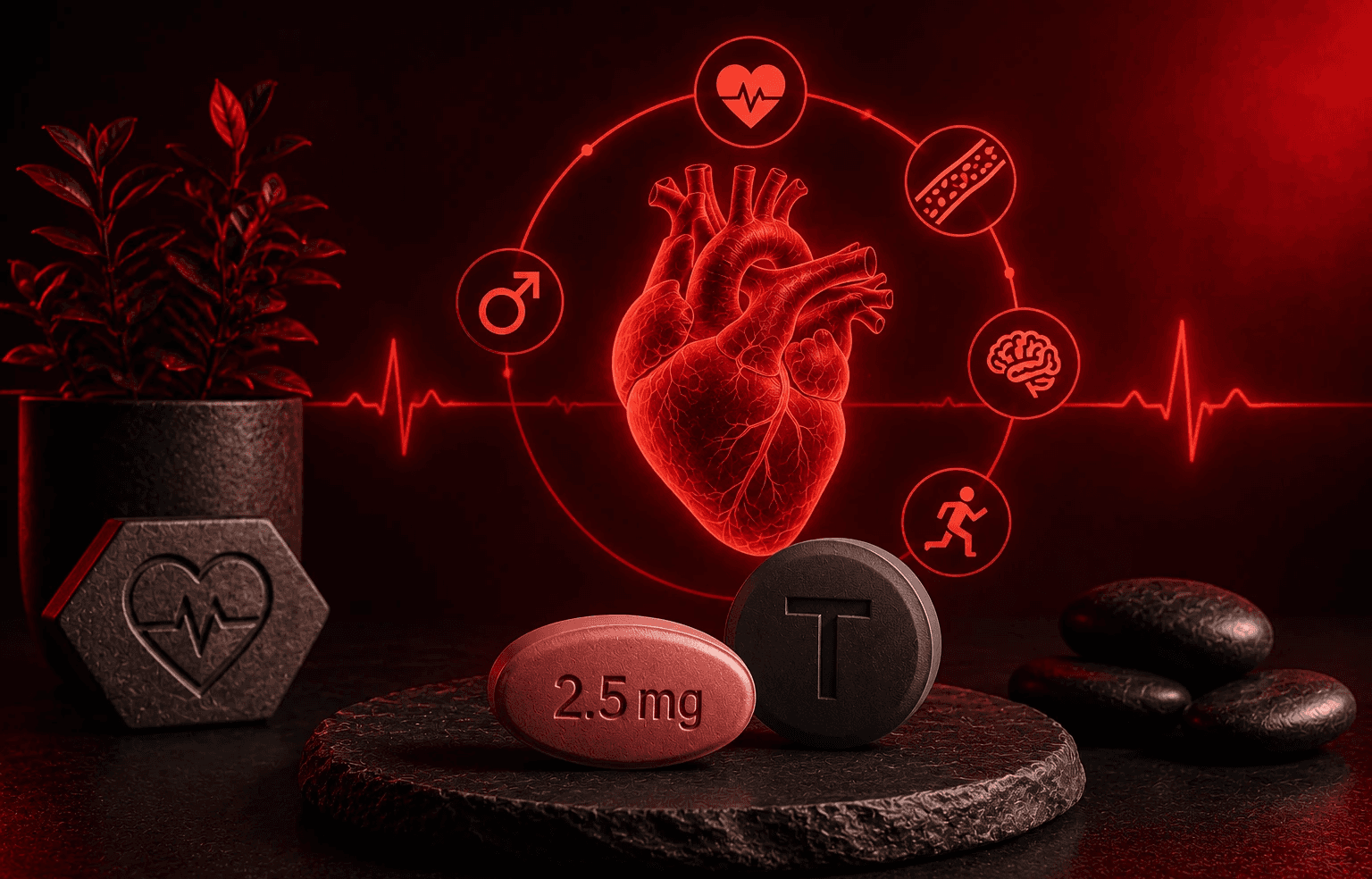
Daily Low-Dose Tadalafil: What the Evidence Shows for Sexual and Cardiovascular Health
Daily Low-Dose Tadalafil: What the Evidence Shows for Sexual and Cardiovascular Health
Stephen Ratcliff, MD
Chief Medical Officer
Physician guide to daily low-dose tadalafil: how it works, who it's right for, the 2024 cardiovascular findings, and how it compares to as-needed use.
Science-led care for better living
Proven treatments for weight, hormones, and energy — without the guesswork. Just real, lasting results.
Science-led care for better living
Proven treatments for weight, hormones, and energy — without the guesswork. Just real, lasting results.
Science-led care for better living
Proven treatments for weight, hormones, and energy — without the guesswork. Just real, lasting results.
Backed by Science, Built for You Personalized, Trusted, Proven.

hello@leaderhealth.com

Men's HRT
Longevity
Quick Links

Backed by Science, Built for You Personalized, Trusted, Proven.
hello@leaderhealth.com
Men's HRT
Longevity
Quick Links
Backed by Science, Built for You Personalized, Trusted, Proven.
hello@leaderhealth.com
Men's HRT
Longevity
Quick Links